-
조선왕실 원(園)의 석물
-
Stone Sculptures in the Won tombs of the Joseon Dynasty
-
(한국학총서-왕실문화총서, [조선왕실 원(園)의 석물], 홍익대학교, 2011.4.1~2014.3.31)
金伊順(홍익대학교)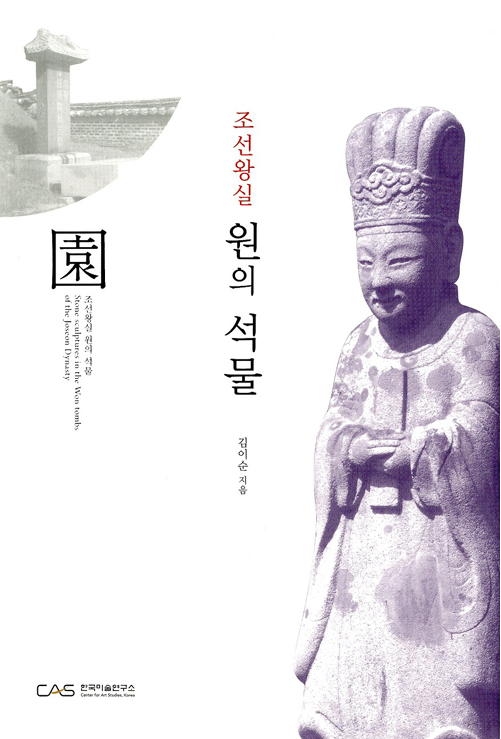
이 책은 조선왕실의 무덤제도 중의 하나인 원을 미술사적인 시각에서 살펴본 연구서이다. 조선왕실에서는 무덤을 피장자의 신분에 따라 능(陵), 원(園), 묘(墓)로 구분해서 조성했다. 조선 초기에는 능과 묘만이 존재했다. 오례의(五禮儀)가 엄격하게 지켜졌던 조선에서는 왕의 친부모라 하더라도 왕과 왕비가 아닌 경우에는 무덤을 능으로 조성할 수 없었다. 반정(反正)으로 왕위에 오른 인조(仁祖, 1595~1649, 재위 1623~1649)는 부모의 무덤을 능으로 꾸밀 수 없었으므로 묘보다는 장대하고 더 예를 갖춘 원이라는 무덤제도를 창안했다. 영조(英祖, 1694~1776; 재위 1724~1776)가 이를 계승하여 생모 숙빈최씨(淑嬪崔氏, 1670~1718)의 무덤을 원으로 조성함으로써 원은 조선 고유의 무덤제도로 정착되었다. 조선 말기에는 세자, 세자빈, 나아가 세손의 무덤까지도 원으로 조성했지만, 원이라는 무덤제도 자체는 자신을 낳은 사친을 추숭할 필요성에서 창안된 것이다. 즉, 선왕의 적자가 왕위를 잇는 자연스러운 왕통 계승이 이루어지지 못하고 후궁 소생이나 왕실의 방계에서 왕위를 계승한 왕이, 법통을 세우고 동시에 왕권을 강화하면서 부모에 대한 효를 다하기 위해서 창안한 것이다.
따라서 조선왕실의 원은 왕통의 흐름과 변화를 시각적으로 드러내는 귀중한 사료이다. 생전에 왕이나 왕비는 아니었지만 왕통과 직접 관련된 인물들의 무덤이 원으로 조성되면서 원과 관련된 문헌기록들이 상당히 남아 있다. 대표적인 예로 영조의 생모 숙빈최씨의 소령원, 순조의 생모 수빈박씨(綏嬪朴氏, 1770~1822)의 휘경원, 그리고 현재는 능으로 추숭되었지만 원래는 원이었던 사도세자(思悼世子, 1735∼1762)의 현륭원을 들 수 있다.
이렇듯 원은 조선왕실의 왕통 연구에 귀중한 사료임에도 불구하고 지금까지 왕릉 연구에 치중되었을 뿐 원에 대한 연구는 미미하다. 선행연구로는 소령원에 대한 자료인 <숙빈최씨자료집>(한국학중앙연구원, 2009)과 궁원제의 성립과 변천을 살핀 논문이 있을 뿐이다. 이 책은 원에 대한 미술사적 선행연구가 전혀 이루어지지 않은 상태에서 각 원에 조성된 석물들을 조사하고 분석 정리하여 원이 가진 역사적 의미와 고유한 가치를 규명하고자 했다. 유물 중에서도 필자가 석물에 주목한 이유는 원 자체는 규모가 작은 편이고 정자각이나 재실 같은 건축물은 사라지거나 재건축되었지만, 화강암으로 제작된 석물은 원 조성 당시의 유물이기 때문이다. 왕릉 석물에 비해 규모가 작으면 작은 대로, 석공의 조각 솜씨가 미숙하면 미숙한 대로, 문헌기록에 담길 수 없던 역사와 문화를 고스란히 함축하고 있어서 당시의 정치적, 경제적, 문화적 상황을 읽어내는 데 귀중한 근거가 된다.
이 책은 석물 중심으로 서술하고 있지만 원이라는 무덤제도의 창안과정에서부터 각 원의 조성과 관련된 기록문헌, 그리고 각 원을 일일이 답사하여 각 원에 현재 배설(排設)되어 있는 석물과 유물을 조사하고 분석하여 조선왕실의 원을 총체적으로 다루었다. 조선왕실과 관련이 있는 원은 기록상으로는 21기가 있는데, 흥경원, 육경원, 영우원(현륭원), 유강원은 후대에 능으로 추봉되었고, 인명원은 묘로 강등되어서 15기만이 원으로 남아 있다. 근래에 조성된 영친왕의 영원과 황세손 이구의 회인원은 조선왕실에서 조성했던 원과는 다른 면모를 지니고 있기 때문에 제외시켰고, 조선왕실 무덤의 전통성을 유지하고 있는 13기만을 연구의 대상으로 삼았다.
책의 구성을 보면, 제1장에서는 조선시대에 원이라는 무덤제도가 등장한 배경과 그 특징을 규명하는 데 중점을 두었다. 원의 명칭이 처음 등장하게 된 배경을 중국 능묘제도와의 관련 속에서 추적하면서, 중국에서 원급에 해당하는 태자묘 및 군왕과 후비를 위한 청대의 원침제도를 살펴보았다. 보다 중점을 둔 것은 조선에서 원제를 독자적으로 창안하게 되는 과정과 이후의 추이를 살피는 것이다. 제2장에서는 조선왕실 원의 배치 상황을 파악하고, 조영과 상설을 종류별로 분석했으며, 제3장에서는 현존하는 조선왕실의 원 13기를 각 피장자의 신분과 무덤의 조성과정, 그리고 현지답사를 통해 수집한 자료를 토대로 상세히 고찰했다. 마지막 제4장에서는 13기의 원과 관련된 기록문헌을 종합적으로 정리했다.
이 책을 계기로 조선왕실 원의 역사적 의미를 다시 돌아보고, 조선시대 능묘연구가 왕릉 중심에서 벗어나 원과 묘로 확장되는 출발점이 되기를 기대한다.
Stone Sculptures in the Won tombs of the Joseon Dynasty
Kim Yisoon (Professor, Hong Ik University)
This book was written after studying 'won' tombs, one of the tomb systems of the Joseon dynasty, from the viewpoint of art history. During the Joseon era, there were three kinds of tombs depending on the status of dead persons. They are royal mausoleums for kings and queens, 'won' tombs for the Crown Princes and the Crown Princesses and tombs for high-ranking officials and ordinary people. During the era when the Five Rites of the State was strictly observed, royal mausoleums couldn't be built even for kings' parents who were not kings and queens. As King Injo (1595~1649, the period of reign 1623~1649) who ascended the throne through a coup couldn't make a royal mausoleum for his parents, he devised a tomb system called 'won' which was bigger and nobler than a tomb. King Yeongjo (1694~1776; the period of reign 1724~1776) continued with this and built 'won' for his natural mother, Sukbin Lady Choi and since then, 'won' tombs became a unique tomb system during the Joseon era. During the later years of Joseon, the Crown Princes, Crown Princesses and the eldest sons of the Crown Princes were buried in 'won' tombs but those 'won' tombs were devised from the necessity to worship birth parents of kings. As natural succession of the Royal line meant that a legitimate son of the late king who should succeed to the throne wasn't made and a child of a royal concubine or a member of a collateral line of the Royal family inherited the throne, a religious tradition was established and sovereign power strengthened, and 'won' tombs were devised to be a tribute to parents.
From such a perspective, 'won' tombs during the Joseon era are valuable historical materials showing the flow and changes of the Royal line visually. As 'won' tombs were made for figures who were not kings or queens during their lifetime but directly related to the Royal line, there still are considerable documents regarding 'won' tombs. Cases in point are 'Soryeongwon' of King Yeongjo's biological mother Sukbin Lady Choi, Hwigyeongwon of King Sunjo's biological mother Subin Lady Park (1770~1822) and Hyeollyungwon of Crown Prince Sado (1735∼1762). Hyeollyungwon, which was originally built as a 'won' tomb, was elevated to a mausoleum later.
In this way, 'won' tombs are valuable historical materials for studying the Royal line of the Joseon era, but most of research has been focused on Royal mausoleums and few studies have been conducted about 'won.' There are a few preceding studies like 『Sukbin Lady Choi Data Collection』 (the Academy of Korean Studies, 2009) about Soryeongwon and a research paper about the formation and changes of Gungwonje (the practice of establishing special shrines and low-level mausoleums). This book was written to explore and examine the historical meanings and unique values of 'won' through investigating, analyzing and arranging stone sculptures made for each 'won' tomb, as there has been no preceding research on 'won' in terms of art history. Special attention was given to stone sculptures among the relics, because 'won' tombs were small and architectures like T-shaped buildings in front of Royal tombs or 'Jaesils' disappeared or were rebuilt but stone sculptures made of granite were relics of the era when 'won' tombs were constructed. They suggest a history and culture which couldn't be contained in documents, regardless of their smaller size than those in Royal tombs and the unskillful sculpting of stonemasons, so they are precious materials for learning about the political, economic and cultural circumstances of the Joseon era.
This book mostly describes those stone sculptures, but efforts were made to survey all 'won' tombs one after another, and to investigate and analyze stone sculptures and relics designed to honor 'won' tombs, in order to generally study 'won' of the Joseon Royal families. According to records, there are 21 'won' tombs related to Joseon Royal families. Whereas Heunggyungwon, Yookgyungwon, Youngwoowon (Hyeollyungwon) and Yugangwon were promoted to mausoleums later, Inmyungwon was degraded to a tomb. In consequence, now there are just 15 'won' tombs. Recently constructed Yeongwon of King Yeongchin and Hoeinwon of Yi Gu, the last prince of Joseon, have different features from 'won' built during the Joseon era, so they were exempted from the study. As a result, the 13 'won' tombs maintaining the tradition of Joseon tombs became the objects of the study.
Chapter 1 of the book is focused on figuring out the background on which the 'won' tomb system appeared during the Joseon era and its characteristics. While investigating the background for the appearance of the name of 'won,' surveys were made about Chinese tombs of Crown Princes corresponding to Joseon's 'won' tombs and the tomb system for monarchs and queens during the Qing era. A more important factor was to look into how Joseon devised the unique 'won' system and how the system was changed. Chapter 2 examines the layout of 'won' tombs, and an analysis was made about architecture and ritual sculpture by kind. In Chapter 3, consideration was given to the social positions of persons buried in the existing 13 'won' tombs and processes for creating those tombs based on data collected in the middle of surveying those sites. For the last Chapter 4, documents regarding those 13 'won' tombs were organized collectively.
This book is expected to provide a starting point for looking back at the historical meanings of Joseon 'won' again and expanding the focus of research on tombs of the Joseon era from Royal mausoleums into 'won' and tombs. -
글쓴날 : [16-12-26 23:42]
