-
The Political Economy of the Small Welfare State in South Korea
-
* 이 저서는 한국학진흥사업단이 지원한 한국학 총서 사업
(2007)의 최종결과물입니다. ** 이 저서는 한국정치학회가 수여하는 2017년 인재저술상을 수상하였습니다.
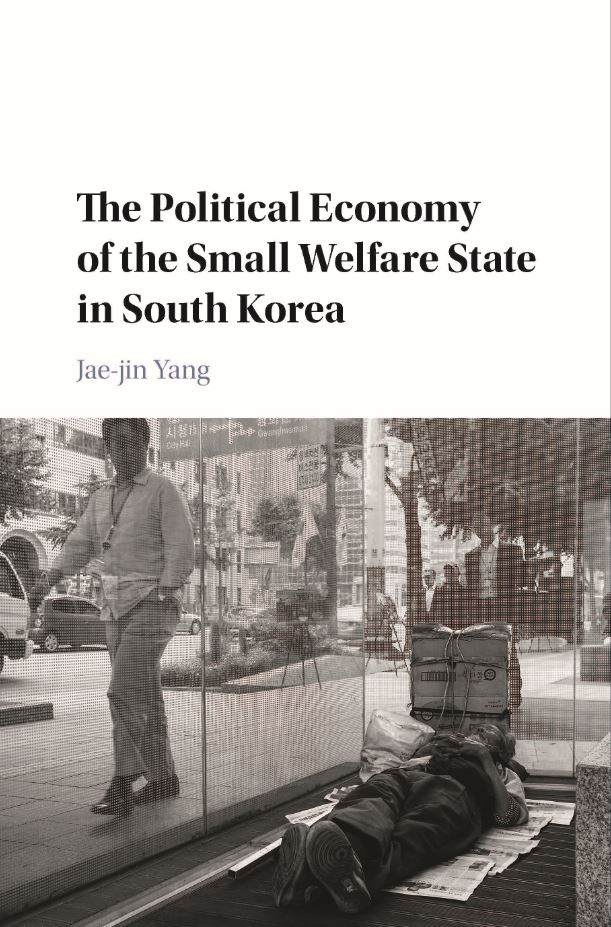
The Political Economy of the Small Welfare State in South Korea
(Cambridge University Press, 2017)
양재진
(연세대학교 행정학과 교수)

이 책은 유럽 복지 체제에서 당연하게 전제되어 왔던 정치.경제.노동 제도들이 한국에서는 결핍되어 있거나 다르게 제도화되어 있음에 주목하며, 한국의 ‘작은’ 복지 국가 형성 과정을 밝히고 있다. 기존의 한국복지국가 연구들이 주로 유교의 영향, 개발독재와 노동탄압, 경제성장우선주의 등의 지역특수적 요인을 강조했다면, 이 책은 후발산업화 전략, 선거제도, 노조 유형 등 비교정치학의 일반적인 개념들을 통해 한국의 특수성을 설명하고, 이를 미국과 일본 등 다른 ‘작은’ 복지국가의 설명에 적용하는 일반화를 시도하고 있다.
한국의 ‘작은’ 복지국가에 대한 이론적 이해한국의 복지제도는 발전해오고 있지만, 다른 OECD 국가와 비교해 볼 때, 사회적 위험에 처했을 때 받을 수 있는 소득보장의 관대성이나 사회서비스의 발달 수준이 상당히 낮다. 왜 그러한가? 이 책은 유럽의 경험을 토대로 만들어진 기존 복지국가 발전이론들, 즉 산업화 논리, 민주주의와 선거경쟁론, 권력자원론, 그리고 국가론을 받아들이면서도, 이들 이론들이 당연시 하였던 전제 조건들(시장경제, 비례대표제와 의원내각제, 초기업적 산별노조, 관료제)이 한국에는 부재하거나 달리 제도화가 되어 있음을 밝히고, 이를 역사제도주의적으로 풀어내고 있다.
첫째, 권위주의 시기, 국가주도 수출지향산업화가 요구하는 가격경쟁력을 유지하기 위해 사회보험의 실시를 최대한 늦추고, 도입 시에는 비용이 덜드는 저부담-저급여로 설계.도입하였다. 둘째, 복지확대가 기대되는 민주화 이후에도, 소선거구제로 인해 제3당인 좌파정당의 원내 진입이 좌절되거나 과소대표되었고, 정치가들은 지역정치에 보다 더 민감하게 반응하게 되었다. 그리고 한 표 차이로도 승패가 갈리는 선거제도는 대통령과 집권당이 비인기정책인 복지증세에 나서지 못하게 만들고 있다. 셋째, 한국의 노동운동이 자유화 되었어도, 대기업과 공기업 노조가 주도하는 한국의 노동운동은 기업의 울타리를 벗어나지 못하고 있다. 이들의 분배욕구를 지불능력이 있는 수출대기업과 공기업이 충족시켜주고 있기에, 조직노동이 공공복지를 위해 크게 힘을 쓸 이유가 없다. 넷째, 경제관료가 기획과 예산권을 갖고 사회지출에 대한 비토권을 행사하는 경향이 크다. 마지막으로, 퇴직금이라는 전통적인 사회보장제도가 실업보험과 연금 등 근대적인 사회보험제도의 도입을 지체시키고 발전을 억누르고 있다. 이 책은 다수대표제, 대기업 중심 경제, 기업노조, 기업복지와 사보험의 우선적 발전 등을 공유하고 있는 일본과 미국의 복지정치와 사회정책 문제를 한국의 경험에 비추어 설명할 수 있다는 이론적 함의도 제시하고 있다.
작은 복지국가 한국의 복지정치와 사회정책형성과정이 책은 한국복지국가의 역사를 권위주의적 발전국가시기(박정희, 전두환 정부), 민주화 전환기 (노태우, 김영삼 정부), 민주당 정부시기(김대중, 노무현 정부) 그리고 보수정부 재집권시기(이명박, 박근혜 정부)로 나누어 살펴보고 있다.
권위주의적 발전국가 시대에 한국복지국가를 규정하는 제도적 틀이 형성되었다. 권력구조는 대통령제, 선거제도는 다수제, 강력한 경제부처의 탄생, 수출지향 산업화와 대기업 위주의 수출주도 경제, 기업별 노조체제의 확립과 낮은 조세부담구조가 그것이다. 산업화 초기 유일한 수출경쟁력인 가격경쟁력을 갖추기 위해 간접노동비용인 복지비용을 최소화하고 대신 가처분 소득을 보전해주기 위해 경제위기 시마다 감세정책을 사용했다. 이 시기 우리나라 사회보장제도의 원형이 되는 사회보험제도가 뒤늦게 도입되었으나, ‘가벼운’ 프로그램으로 지불능력이 있는 공무원과 대기업을 대상으로 시작되었다.
1980년대 민주화라는 사회구조의 거대한 변화가 있었음에도 발전국가 시기에 확립된 제도들은 그대로 이어져 내려왔다. 수출지향 산업구조, 대통령제, 소선거구제, 강한 경제 관료, 낮은 조세부담률, 기업별노조체제 등이 그것이다. 시민사회는 민주화 세력의 정부를 만들어 내지 못하고, 좌파 정당 건설 운동도 무위로 돌아갔으며, 전투적 노동운동이 일어났지만 사업장 울타리를 벗어나지 못했다. 국민연금(1988)와 고용보험(1995)이 도입되고 전국민의료보험시대도 개막되었지만 사회보장체제의 근본적인 전환은 일어나지는 못했다.
김대중.노무현 시대는 진보적인 대통령을 중심으로 과거 운동권 출신 정치가들과 시민단체 등이 친복지네트워크를 형성하고, 복지개혁의 추동력이 되었다. 한국은, 계급이나 정당에 기반한 유럽과는 달리, 친복지 대통령 집권 시기에 친복지네트워크가 활성화되었다가, 보수적 대통령이 등장하면 와해되는 에드호크적인 정책네크워크의 특징을 보인다. 김대중 정부 때, 사회보험이 크게 확장되었고, 노무현 정부 때는 공보육, 장기노인요양보험, EITC 등 사회서비스와 사회투자성 복지프로그램이 새롭게 도입되었다. 그러나 사회보장의 확대가 불안한 사회(under-secured society)의 등장을 상쇄하지는 못했다. 빈곤율·자살률이 상승하고 출산율이 크게 하락하기 시작했다. 사회적 양극화와 근로빈곤 현상도 나타나기 시작했다. 이 책은 불안한 사회의 근원을 기업별노조체제로 인한 노동시장의 양극화와 이중화 때문으로 본다. 기업내 조직원의 고용안정, 임금인상, 기업복지가 담장 밖 근로자인 일반국민의 복지문제 해결보다 우선시 된다.
보수의 재집권 시기에서는 이명박 정부의 대규모 감세, 무상복지바람, 그리고 2014년 세제개편안을 통해본 증세의 정치를 다룬다. 증세없는 복지를 내세워 당선된 박근혜는 복지공약을 축소 이행했지만, 막대한 소요 예산 마련을 위해 담뱃세 인상과 조세감면 축소 등의 세제 개편을 단행했다. 그러나 2014년 세제개편에 대해 사실상의 증세라며 국민들이 크게 반발하였다. 야당은 물론 여당에서도 반대하여 중산층에 대한 조세감면 축소가 철회되고, 오히려 소득세를 한 푼도 내지 않는 면제자가 전체 소득세과세대상자의 50% 가까이로 대폭 늘어났다. 대다수 유권자들을 건드리는 (보편)증세에 민감한 정치구조의 민낯이 드러난 것이다. 이후 무상복지 바람은 잦아졌다. 친복지의 약한 제도적 기반 때문이다. 2012년 복지바람에 편승해 국회에 입성한 의원도 여전히 복지보다는 지역구 관련 예산 늘리기에 몰두하는 경향을 보인다는 것을 밝히고, ‘복지국가실현연석회의’의 실패를 통해 노동이 빠진 시민사회에서 친복지 세력의 제도적 기반이 허약함을 보여주고 있다.
작은 복지국가 이론의 일반화 모색한국과 비슷한 상황은 일본과 미국에서도 찾아볼 수 있다. 낮은 소득이전 급여, 사회서비스의 상대적 저발달과 민간 전달체계에 대한 과도한 의존, 낮은 공공사회지출 그리고 기업복지와 같은 사적복지의 발달 등이 단순히 우연의 일치는 아니라고 본다. 이 책은 이들 국가에서 공통적으로 발견되는 특징들, 즉 기업별 노조가 지배적이고 이들의 분배욕구를 글로벌 거대 기업들이 높은 임금과 기업복지로 흡수하고 있는 점, 선거제도는 다수대표제로 지역특수적인 이해관계가 대표되며 계급정치보다는 구유통정치가 지배적인 현실, 그리고 낮은 조세부담 구조를 타파하지 못해 사회지출에 한계를 보이는 점 등을 지적하고 있다. 후발복지국가인 한국은 제도변화가 없으면 일본이나 미국이 걸어왔던 길을 밟아나갈 것으로 예상한다.
Jae-jin Yang
(Public Administration, Yonsei University)
This book illuminates how Korea’s small welfare state has developed, focusing on the regressive role played by political, economic, and labor institutions. Existing studies on the Korean welfare state have focused on regional-specific characteristics of Korea such as Confucianism, developmental dictatorship and repression of labor, and productivism. This study, however, uses the general concepts of comparative politics such as late industrialization strategies, electoral institutions, and union types to explain Korea’s underdeveloped welfare state and to generalize the Korean case through comparisons with other “small” welfare states in the United States and Japan.Theoretical Understanding of the Small Welfare State in Korea
Korea’s social security system is still developing, but when compared with other OECD countries, the level of social services and the generosity of income maintenance programs are quite low. Why is this? Although this book accommodates the basic argument of the existing theories of the welfare state development, it takes a closer look at the different institutional configurations of Korea which differ from most large European welfare states: enterprise unionism, big business-dominated economy, plurality electoral rules, presidentialism, stroong economic bureaucracy, and early development of corporate welfare.First, during the authoritarian developmental period, concern for price competitiveness made state elites and employers very sensitive about labor costs. Wages were tightly controlled, social insurances, which are a form of indirect labor cost, were postponed as long as possible, and when social insurance had to be introduced, it was designed as “light” programs with low contribution and low benefit. Second, even after democratization, the single-member district (SMD) electoral system induced politicians to provide geographically-targeted benefits rather than nation-wide social policies. Also, the SMD system set a high hurdle for newly-founded leftist third parties to enter the National Assembly. Also, presidents would not push for unpopular tax increases to pay for welfare programs due to the winner–takes-all nature of the simple plurality electoral rule. If even a small percentage of the middle class voters withdraw their support, presidential candidates would lose the election. Third, organized labor led by enterprise unions, which represent privileged workers at large corporations, demanded job security, high wages, and corporate welfare. Because their demands are well satisfied by affluent large corporations, they have no practical incentive to call for social welfare beyond their corporate boundaries. Fourth, strong economic bureaucrats with planning and budgeting authority tend to act as veto player in social policy making. Finally, the early development of retirement allowance has retarded the introduction and expansion of unemployment insurance and public pension programs.
The theoretical implications of this book are that welfare politics and social policy issues of Japan and the United States can be better understood through the experience and logic of the small welfare state in Korea because they share key characteristics with Korea such as a plurality electoral system, a large corporation-centered economy, enterprise unions, and early development of private welfare.Welfare Politics and Social Policy-making Processes in the Small Welfare State in Korea
The history of the Korean welfare state can be divided into four periods: the authoritarian developmental state period (Park Chung Hee and Chun Doo Hwan governments), the democratic transition period (Roh Tae Woo and Kim Young Sam governments), the Democratic Party government period (Kim Dae Jung and Roh Moo Hyun governments), and the period of a return to conservative rule (Lee Myung Bak and Park Geun Hye governments).
The institutional framework which affects the Korean welfare state was shaped during the authoritarian developmental state period: presidential system, SMD system rules, strong economic bureaucracy, export-oriented industrialization and large exporting firms, enterprise unionism, and low tax regime. During the formative early stages of industrialization, indirect labor costs were kept to a minimum to maintain price competiveness. In times of economic crises, tax cuts were employed to increase disposable income, give work incentives and boost investment. During this period, “light” social insurance programs were belatedly introduced. These programs started from large companies and then expanded gradually to smaller firms.
Despite the structural changes brought about by democratization in the 1980s, the institutions established during the authoritarian era remained unchanged: export-oriented industry, presidentialism, SMD system, strong economic bureaucrats, low taxes, and enterprise unionism, etc. The progressive elements of civil society failed to establish a “democratic” government, not to mention vote in any leftist parties into the National Assembly. The labor movement was militant, but it was unable to move beyond the confines of workplaces. Despite that fact that the National Pension (1988) and Employment Insurance (1995) programs were introduced and a unified single National Health Insurance was implemented (1999), a fundamental regime change in the country’s social security system did not take place. During the Kim Dae Jung and Roh Moo Hyun administrations, former activist politicians and civil movement groups formed a pro-social policy network around the presidents, and this became the main impetus for pro-welfare reform. As opposed to Europe where welfare politics are based on class or political parties, ad hoc policy networks characterize Korean welfare politics in which a pro-welfare network formed during progressive administrations collapses under conservative rule. The Kim Dae Jung government strengthened social insurance programs while the Roh Moo Hyun government introduced many new social services and social investment policies such as childcare, long-term elderly care, and EITC.
However, these social security programs could not offset the emergence of an under-secured society. The poverty rate and suicide rate increased while the birth rate sharply declined. Social polarization and the working poor phenomenon began to emerge. This book argues that the underlying cause of this under-secured society is the polarization and dualization of the labor market. It reveals that economic unionism has aggravated the situation.
This book deals with large-scale tax cuts and the ‘wind of free welfare’ during the Lee Myung Bak government and tax politics of the 2014 tax code reform by the Park Geun Hye administration. Park Geun Hye, who was elected on a platform of ‘more welfare without tax increases,’ proceeded with her welfare pledges in a downscaled manner. Nevertheless, to provide the enormous budget required to carry out her electoral pledges, the government reformed the tax code to raise tax revenues by scaling back tax exemptions. However, people were widely opposed to the 2014 tax reform. Not only opposition parties but even the ruling party criticized the policy. The Park government retreated by withdrawing the reduction of tax exemptions for the middle class. And, as a result, the percentage of income-earners exempt from paying even a penny of income tax exploded to about 50 percent. This event showed that Korea’s political structure was very sensitive to unpopular tax increase that affects a majority of voters. From then on, the wind of free welfare began to phase out. This book unveils the weak institutional base for pro-welfare politics by pointing to the persistence of pork barrel politics even when the wind of free welfare blew strongly and to the limitations of the pro-welfare movement that lacks active participation from organized labor.
Generalizing the Theory of the Small Welfare State in the US and Japan
We can observe similar phenomenon in Japan and the United States as well. Low levels of social transfer, underdeveloped social services, reliance on private delivery systems, low levels of public social expenditures, and the development of private welfare may not be a coincidence. This book points out that these countries share several characteristics. First, enterprise unions are dominant. Their demands are satisfied by the high wages and corporate welfare provided by large corporations, which in turn erased unions’ interest in public welfare. Second, plurality electoral systems are in place, which raise local interests to the fore and result in pork barrel politics, dampening class-based socio-economic policy issues. Third, the low tax regime in the three countries places a cap on social expenditures. This book strongly suggests that the Korean welfare state will follow the United States and Japanese course of welfare state development and remain a small welfare state if there are no significant institutional changes.
* This book won the 2017 Injae Best Book Award presented by the Korean Political Science Association. -
글쓴날 : [18-08-24 13:17]
