• A reflection on the book project, P’ungsu: A Study of Geomancy in Korea (P’ungsu: A Study of Geomancy in Korea (한국의 풍수 연구) 소개와 회고)


  • A reflection on the book project, P’ungsu: A Study of Geomancy in Korea


    Hong-key Yoon

    (School of Environment, University of Auckland)
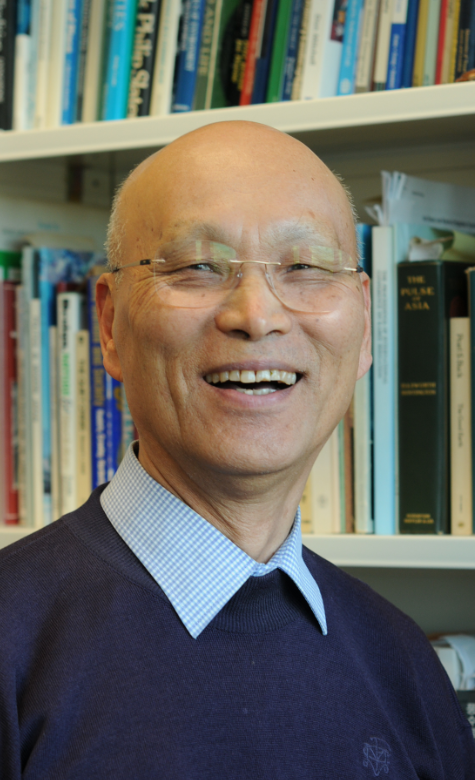

    This book represents an advanced level study of geomancy (fengshui in Chinese and p’ungsu in Korean) as practiced in Korea. Geomancy is indigenous to China and is the traditional East Asian art of selecting auspicious sites for houses, graves, temples and settlements. In traditional Korea the art played a critically important role in the construction of the cultural landscape and environmental management. This book is a milestone in the history of academic research on geomancy in Korean culture, because it is the first interdisciplinary work of its kind as well as the first book that uses the Korean term for geomancy, P’ungsu, as the title of a book in English. This book provides a unique insight into the nature of geomancy with sophisticated interdisciplinary perspectives from the humanities and environmental studies. When the publisher reviewed the manuscript of this book before publication by two external referees, they praised it with remarks such as “an excellent piece of scholarly manuscript”, “excellent research works in this field that [are] rarely found in the academic world”, “a very significant addition to the knowledge”, and “Its breadth and depth of scholarship give a unique insight…”.


    Currently a number of books on geomancy exist in English as well as in Korean. Most of them are ‘geomancy manual’ type works written by practicing geomancers for general readers, some of who aspire to be professional geomancers. However, this book is different from such books, because it involves serious academic research that documents, analyses and explains past and current practices of geomancy in Korea. The research and publication of this work was supported by the Korean Studies Promotion Service with the Academy of Korean Studies Grant funded by the Korean Government (MEST) (AKS-2010-AMZ-2101).


    The editor of this book conceived the idea of writing a book on Korean geomancy with an interdisciplinary approach and invited scholars to contribute. From 2009 the editor and contributors of each chapter held four workshops to review and improve their research manuscripts. This book covers a wide range of topics on geomancy in Korean cultural and historical contexts by scholars from geography, historical studies, environmental science, architecture, landscape architecture, religious studies and medical science (analytical psychology) backgrounds. The book consists of 17 chapters including the introduction and conclusion. The first Part consists of 6 chapters written by Hong-key Yoon. In the Introduction chapter, by reviewing the roots of western academic studies of geomancy and the changing definitions of the word geomancy in authoritative English dictionaries, Yoon argues for adopting the English term geomancy instead of the transliterated Chinese word, fengshui. Chapter 2 discusses topics such as the social and cultural history of geomancy and divides the Korean history of geomancy into 8 periods. Chapter 3 focuses on the effect of geomancy on major social upheavals and armed uprisings in Korean history, while Chapter 4 discusses government affairs relating to geomancy in the Koryŏ and Chosŏn dynasties. Chapter 5 introduces historical cases of environmental management through geomancy and Chapter 6 summarizes the principal characteristics of geomancy as practiced in Korea.


    Part two has 11 chapters including 8 contributed by scholars from different disciplines. Chapter 7 (Dowon Lee) addresses issues relating to water acquisition and management in geomantic landscapes during the Chosŏn dynasty, while Chapter 8 (Kim Duk Hyun) discusses the geomantic significance of groves planted and managed in Chinju City. Chapter 9 (In-choul Zho) reveals that traditional Korean architecture adopted geomantic principles as a cornerstone of site selection and house construction. Chapter 10 (Jongsang Sung) argues that geomantic aesthetics formed the mental image and influenced the overall formation of Yun Sŏndo’s wollim. Chapter 11 (Hong-key Yoon) investigates the cultural ecological aspect of the geomantic landscape of a sailing boat, while Chapter 12 (Hong-key Yoon) discusses the modification of landforms in Korea to make up for the shortcomings of a geomantic landscape. Chapter 13 (Cheol Joong Kang) examines deep psychological interpretations of Koreans’ geomantic desire to acquire auspicious sites. Chapter 14 (Won-suk Choi) explores the interrelationship between Buddhism and geomancy while Chapter 15 (Hwa Lee) discusses geomantic ideas in the neo-Confucian society of the Chosŏn dynasty. Chapter 16 (Inshil Choe Yoon) asserts that the traditional geomantic perception of preferred settlement locations is best dealt with in T’aengniji.


    Readers of this book will better understand the impact of geomancy on the traditional Korean cultural landscape and learn the historical development of Korean geomentality. They will also appreciate the significant ecological principles embedded in the geomantic traditions of Korea, even though geomancy as practiced in Korea has been a form of superstition and divination. One American scholar of Korean cultural geography and geomancy recently commented that this book “is a major event in the English-language scholarly study of geomancy”. (Written by Hong-key Yoon, School of Environment, University of Auckland)


    P’ungsu: A Study of Geomancy in Korea. Edited by Hong-key Yoon

    xix and 421pages; 74 color photos, 26 b/w photos, 2 maps, 7 tables, 1 figure, bibliography and index. Albany, NY: State University of New York Press, January 2018. $95.00 jacketed hc. ISBN 978-1-4384-6869-3.


    P’ungsu: A Study of Geomancy in Korea (한국의 풍수 연구) 소개와 회고


    윤홍기

    (School of Environment, University of Auckland)


    이 책은 한국의 풍수에 관한 기초지식을 서양 독자에게 소개하는 것이 아니고, 풍수에 관한 전문적인 분야별 연구를 서양 학자들에게 알리는 책이다. 중국에서 발생한 풍수술은 주택, 묘지, 사원 및 취락 등을 위한 좋은 터를 찾는 동아시아의 택지술로 널리 퍼졌다. 전통 한국 사회에서는 풍수술은 문화 경관을 조성하고 환경관리를 하는 데 큰 영향을 미쳤다. 이 책이 한국의 풍수 연구사에서 이정표 역할을 한다는 것에는 다음 두 가지 이유가 있다. 첫째, 이 책은 풍수에 관한 최초의 학제간 전문 연구서이다. 둘째, 영문으로 출판된 이 풍수연구서는 최초로 한국어 발음인 풍수(p’ungsu)라는 말을 중국어 발음인 펭수이(fengshui)라는 말 대신에 책 제목으로 사용하였다는 것이다. 이 책은 인문학과 환경학 분야의 학제적인 관점에서 풍수지리설의 본질을 보는 특이한 점이 있다. 출판사에서 이 책을 출판하기 위한 원고 심사 때 의뢰한 2명의 외부 심사자들은 이 책의 원고가 탁월하게 학술적이며, 학문 분야에서 극히 찾아 보기 힘든 훌륭한 연구물이므로 이 분야 지식세계에 중요한 공헌을 하는 것이라고 평가하였다.


    현재 풍수술에 관한 저서로는 영어나 한국어로 된 여러 책들이 시장 서가에 상당히 나와 있다. 그러한 책들은 풍수술에 흥미를 느끼는 일반 독자들이나 장래 지관이 되기를 원하는 풍수사 후보자들을 대상으로 하는 풍수술 해설서들이 대부분이다. 그러나 이 책은 그러한 일반 풍수술서와는 구분되는 풍수에 대한 학술연구서이다. 이 책은 풍수가 과거 한국사회 문화환경에 어떠한 영향을 끼쳤고 어떻게 한국 사람들이 한국적인 환경에서 풍수술을 운용해 왔는지를 해당 학문 분야의 연구방법에 따라 연구한 전문 학술서이다. 이 책의 연구 출판은 한국학중앙연구원 한국학진흥사업단 연구비(AKS-2010-AMZ-2101)를 받아 진행되었다. 이에 고마운 마음을 전하고자 한다.


    풍수술은 복잡한 이론체계를 가지고 인간과 환경 관계를 다루는 택지술이기 때문에 그것을 연구하는 데에는 여러 학문 분야가 힘을 합쳐야 하는 학제간의 통합적인 지식과 통찰이 요구되는 것이므로, 하나의 학문분야에 속한 학자 한 사람의 전문 지식만으로는 풍수지리설의 전모를 다루어 연구하기가 힘들다. 그래서 이 책의 편집자는 한국의 풍수지리설에 대한 학제간 연구의 필요성을 느끼고 여러 전공 분야에서 풍수를 연구하는 학자들과 연락하여 각자 전공 분야에서 다루는 풍수술에 관한 연구논문을 모아 영문 저서를 내는 계획을 하였다. 그래서 이 책은 풍수에 관한 여러 연구주제를 문화지리학, 역사지리학, 환경학, 건축학, 정원학, 종교학, 정신의학 등 여러 전공 분야의 학자들이 힘을 합쳐 자기 전공분야에서 다루는 풍수지리설의 측면을 연구하였다. 이 연구 과정에서 2009년 이래 네 번의 공동 연구 모임(workshop)을 하면서 서로의 연구를 격려하고 비평하여 연구의 질을 높이려고 하였다. 이 책은 서론 장과 결론 장을 포함하여 모두 17개 장으로 구성되어 있으며, 크게 2부(Two Parts)로 나뉘어져 있다. 제1부(Part 1)에 속하는 6개 장은 윤홍기가 썼는데, 서론에서 왜 펭수이(fengshui)라는 중국어 발음 대신에 영어 단어인 geomancy라는 말을 영문서적에서는 풍수를 의미하는 말로 사용해야 하는지를 토론했다. 제2장에서는 한국의 풍수 문화사를 고대에서 현대에 이르기까지 8개 시기로 나누어 토론하였고, 제3장에서는 풍수가 한국에서 역사상 중요한 사회변혁-무력항쟁에 미친 영향을 다루었다. 제 4장에서는 고려시대와 조선시대의 풍수와 관련된 과거제도와 관청을 서술하였으며, 제5장에서는 역사적으로 중요한 환경관리의 예를 소개하였다. 제6장에서는 한국에서 시행된 풍수술의 특징을 열거 서술하려고 하였다.


    제2부(Part 2)에는 8명의 공저자들이 쓴 11개 장의 글이 있다. 제7장(이도원)은 조선시대의 풍수경관에서 물의 중요성을 다루었고, 제8장(김덕현)은 풍수적으로 중요한 진주시의 대나무 숲의 조성과 관리를 토론하였다. 제9장(조인철)은 풍수를 적용한 터잡기와 가옥건축 과정을 통해서 한국 전통건축의 특징을 논하였고, 제10장(성종상)은 고산 윤선도의 원림에 나타난 풍수미학의 원리를 토론하였다. 제11장(윤홍기)은 행주형의 문화생태적인 면을 조사하였고, 제12장(윤홍기)은 한국 풍수에서 조산비보의 특징을 토론하였다. 제13장(강철중)은 한국인이 길지를 찾아 얻고자 하는 마음을 융학파의 심성 분석 방법을 적용하여 분석하였다. 제14장(최원석)은 한국 역사에서 불교와 풍수 관계를 살펴보았는데, 불교 사원의 위치를 정할 때 풍수술이 이용되었고, 풍수는 불교 사원을 비보 풍수에 이용했다는 것을 토론하였다. 제15장(이화)은 조선조 주자학 사회에서 풍수사상이 어떻게 다루어졌는지를 토론하였고, 제16장(최인실)은 이중환의 택리지에 재래 한국의 풍수 택지사상이 잘 표현되었다는 것을 지적하였다.


    이 책을 읽는 독자들은 한국의 재래 문화경관과 한국인의 땅을 다루는 심성에 대해 보다 깊이 이해를 할 수 있을 것이다. 또 독자들은 한국에서 시행된 풍수는 근본적으로 미신적이고 점술적인 것이지만 풍수사상 근저에는 의미있는 생태학적 원리가 깔려 있다는 것을 실감하게 될 것이다. 한국 문화지리와 풍수연구에 조예가 깊은 한 학자가 말하길 이 책의 출판은 영어권 풍수연구에 있어서 대단한 획을 긋는 일이라고 하였다. (윤홍기 씀, University of Auckland)


    〈부 기〉

    1. 이 글의 한국어 원고는 필자 윤홍기 교수로부터 허락을 받아 한국학중앙연구원 온라인소식지 제111호(2018.4월호)의 <한국학 아름드리>에 먼저 게재되었습니다. 

    2. 이 글의 저작권은 한국학진흥사업단에 귀속됩니다. 


  • 글쓴날 : [18-04-25 16:09]
    • ksps 기자[akssje@aks.ac.kr]
    • 다른기사보기 ksps 기자의 다른기사보기