-
다산의『논어고금주』영문 번역의 의의
-
English Translation of Dasan’s Noneo Gogeum Ju
한국고전100선 영문번역|다산 논어고금주 영문 번역 및 해설|Kim Hongkyung|2013.11.1-2016.10.31
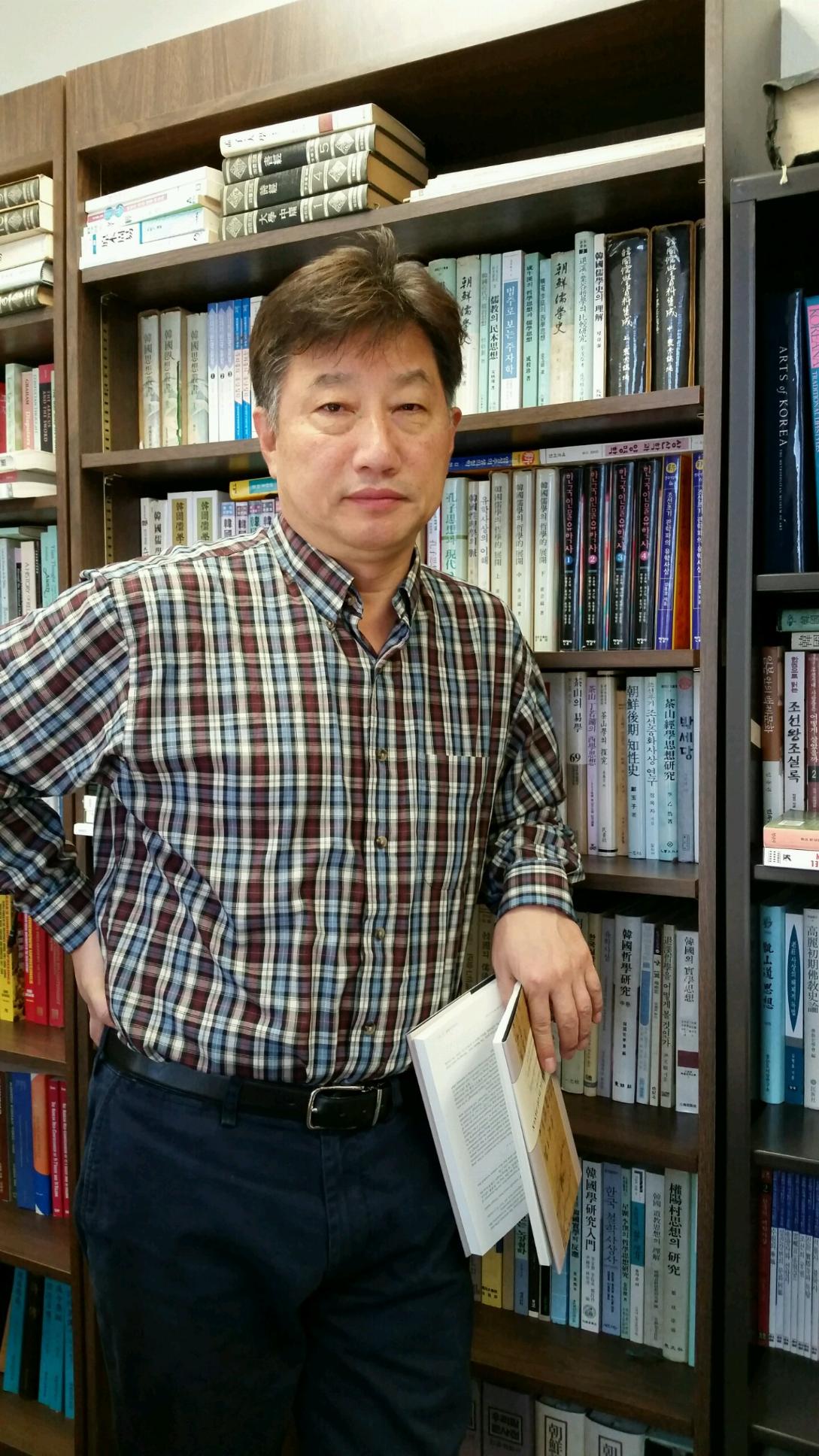
김홍경
(Associate Professor, Department of Asian and Asian American Studies, Stony Brook University)
The Analects of Dasan: A Korean Syncretic Reading이라고 이름된 이 책은 다산 정약용 선생이 1813년 완성한 <논어고금주>를 역자의 해설과 함께 번역한 것이다. 한중연의 지원을 받아 2013년부터 시작된 이 프로젝트는 한국의 고전 중에서도 고전이라고 할 수 있는 해당 저작을 총 6권으로 영문 출판하려는 의도로 기획되었다. 그 중 1, 2권은 Oxford University Press에서 2016년과 2017년 각각 출판되었고, 3권은 현재 계약을 마치고 출판 작업을 진행 중이다.
이 프로젝트의 중요성은 무엇보다도 한국 지성사에서 차지하는 원저의 가치에서 기인한다. 원저는 <논어>라는 걸출한 고전을 한국인의 손으로, 한국의 시각을 반영하여 완벽히 해설한 최초의 책임과 동시에, 유학사를 통해 볼 때도 한당의 고증학과 송명의 이학 전통을 극복하여 새로운 유학의 지평을 열려고 한 굉장한 시도이다. 다산은 이 책에서 <논어>에 대한 고주와 금주를 망라하여 그 중 좋은 견해는 받아들이고 옳지 않다고 판단한 견해는 비판하면서 <논어>를 이렇게 읽어야 한다고 제안한다. 이를 위해 그는 전통적으로 존중되었던 모든 <논어>의 주해서뿐만 아니라 그와 거의 동시대를 살았던 중국과 일본 학자들의 견해까지 참고하였으며, 무엇보다도 그 자신의 독창적인 사색과 불굴의 연구 정신으로 이제까지 존재하지 않았던 <논어> 해설서를 만들어 냈다. 그에 따라 이 책은 그 첫머리에 175개에 달하는 원의, 곧 참된 의미를 찾아내려는 논쟁을 수록하였는데, 사실 이 책의 도전과 창신은 이들 추려진 논쟁을 넘어서 책 곳곳에서 발견되는 셀 수 없이 많은 다양한 철학적, 역사적, 경학적, 서지학적 논쟁 전체에서 드러난다. 이러한 논쟁과 문제 제기를 통해 다산은 단순히 <논어>를 정확히 해설한다는 것을 넘어 그의 새로운 <논어> 읽기를 가능하게 하는 한국인의 세계관, 가치 의식은 무엇인가를 보여준다.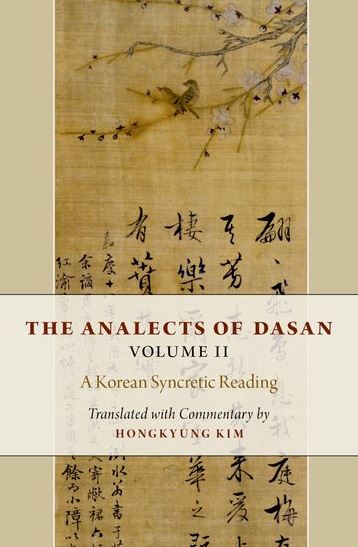
이 프로젝트에 역자의 해설이 필요했던 것도 사실 때때로 단 한 글자에 대한 다산의 독창적 정의가 전혀 다른 세계관을 보여주고 있기 때문이고, 그 미묘한 함의가 때로는 다산 자신에 의해 명확하게 해설되어 있지 않기 때문이다. <논어고금주>를 완역한 한글 번역본이 있지만 거기에서도 이 책이 가지는 많은 철학적 함의는 잘 해설되어 있지 않다. 때로 한글 번역본이 다산의 <논어> 해석을 반영하여 원문을 번역하는 데 실패하고 있다는 것은 더 큰 문제점이다. 따라서 본 프로젝트는 <논어고금주> 한글 번역본의 영문 번역이 아니고, <논어고금주> 원전 자체를 직접 번역 해석한 것이다. 번역을 위해서는 신조선사본 여유당전서, 민족문화추진회본 여유당전서, 정본 여유당전서에 수록된 <논어고금주>를 참고하였고, 규장각과 장서각에 소장되어 있는 필사본은 40권으로 되어 있는 원본의 장절을 확인하는 데에만 사용하였다.
English Translation of Dasan’s Noneo Gogeum Ju
Kim Hongkyung(Associate Professor, Department of Asian and Asian American Studies, Stony Brook University)
The book entitled The Analects of Dasan: A Korean Syncretic Reading is a translation of Dasan’s (Jeong Yak-yog) Noneo gogeum ju (Old and New Commentaries of the Analects), which was completed in 1813, with commentary by the translator. This project began in 2013 with the support of the Academy of Korean Studies and was started with the intention of publishing this Korean classic in English in six volumes. The first and second volumes were published in 2016 and 2017, respectively, by Oxford University Press, and the third volume is currently in the process of being published.
This project is significant because the original Noneo goeum ju was the first Korean work to interpret the Analects, an invaluable classical text in East Asia, in its entirety from the perspective of Korea and Korean Confucianism. It not only represents one of the greatest achievements of Korean Confucianism, but proves also to be one of the most groundbreaking works among all Confucian legacies in East Asia, as it opened the way for progress in Confucian philosophy. In this book, Dasan referred to both old and new commentaries on the Analects and suggested the proper way of understanding the text. To do this, he consulted not only the traditionally respected annotations of the Analects but also the writings of contemporary Chinese and Japanese scholars. But above all he relied on his own creative thoughts and strenuous research to produce a style of commentary on the Analects. As a result, Noneo goeum ju came to contain one hundred and seventy-five new interpretations of the Analects, hundreds of “questions” about the neo-Confucian commentaries, hundreds of references to scholarly works on the Analects, thousands of quotations from various East Asian classics to support the author’s arguments, and hundreds of philological discussions. Through these discussions, Dasan moves beyond a simple exact interpretation of the Analects and provides a “new” reading of the Analects, which reflects the world view and values of the Korean people.
The reason the translation of Dasan’s work requires translator’s commentary is because Dasan illustrated an innovative reading of the classic by at times creatively defining a single character in a subtle manner and because Dasan himself did not clearly explain the delicate undertones of his words. While there is a complete translation of Noneo gogeum ju into Korean, the philosophical nuances of Dasan’s work are not explained well in the book. The Korean translation, in places, does not mirror Dasan’s creative reading in its translation of the main text as well. Thus this project is not an English translation of the Korean translation of Noneo gogeum ju and is rather a direct translation of the original. In order to complete this translation, the copies of Noneo gogeum ju contained in the Yeoyudang jeonseo (Entire Works of Yeoyudang) published by Sinjoseon sa and Minjok munhwa chujinhoe, and the Jeongbon Yeoyudang jeonseo (Established Edition of Entire Works of Yeoyudang) were consulted, and the manuscript edition housed in Kyujanggak was used only for confirming the chapters of the forty-roll original. (Written and revised by Kim Hongkyung and translated by Benjamin A. Engel)
-
글쓴날 : [18-02-20 16:39]
